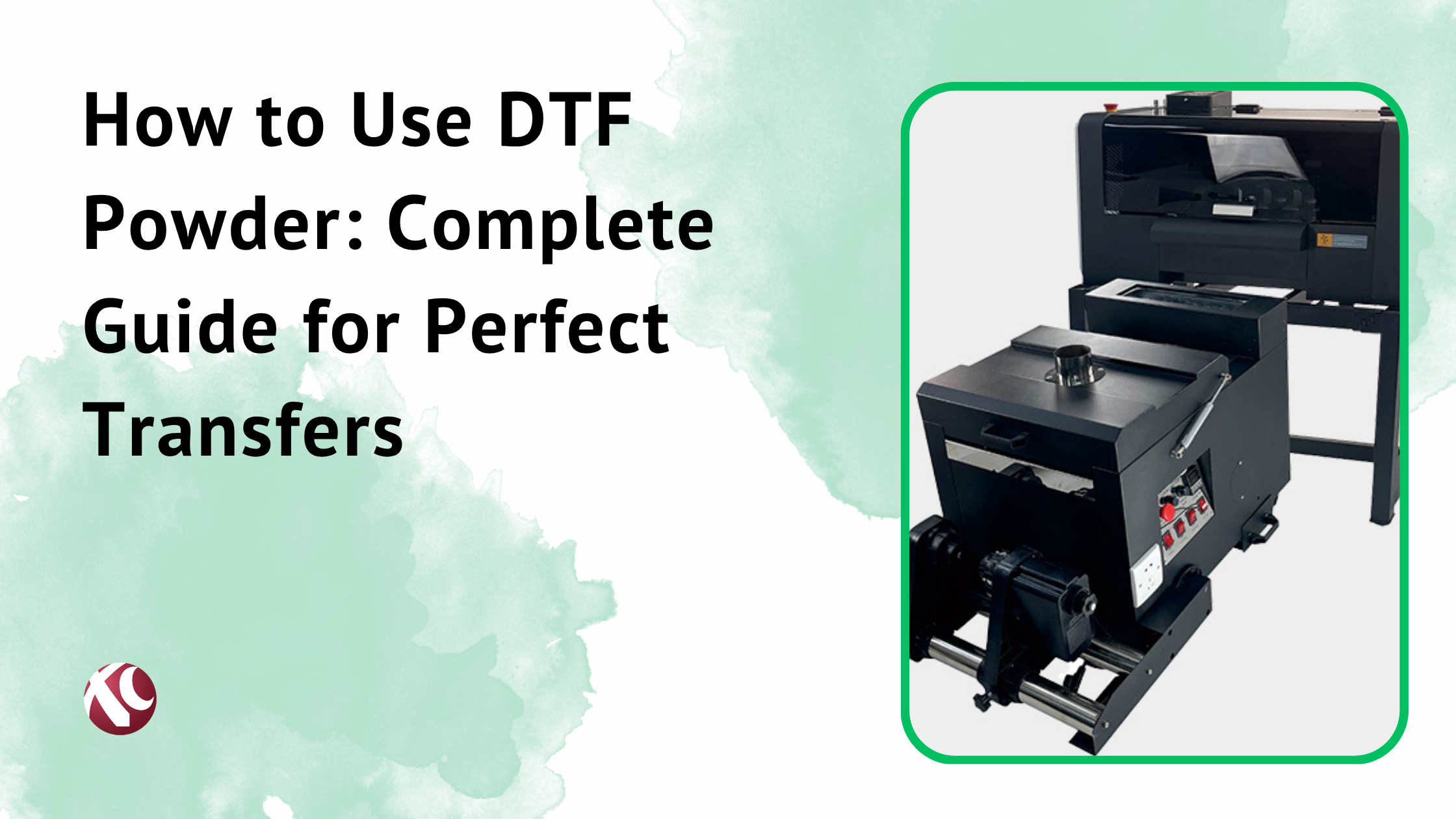
Yes. DTF transfers work on polyester. Really well, actually.
I get this question a lot. People assume polyester is tricky because of dye migration issues with other methods. But DTF? It’s almost like polyester was made for it.
Here’s the thing. Polyester doesn’t need pre-treatment. Colors come out vibrant. The adhesive bonds beautifully to synthetic fibers. And you don’t have to worry about the ghosting problems that plague sublimation on darker fabrics.
This guide covers everything. How DTF works on polyester. The right settings. Common mistakes. Equipment recommendations. Cost breakdowns. All of it.
What are DTF Transfers?
DTF stands for Direct-to-Film. Simple name for a simple concept.
You print your design onto a special PET film using pigment inks.
The transfer bonds to almost any fabric. Cotton, polyester, blends, nylon. Doesn’t matter much.
Sublimation only works on polyester and requires light-colored fabrics. DTG needs pre-treatment and works best on cotton. Screen printing requires separate screens for each color.
DTF? One process. One setup. Works on basically everything.
The colors are vibrant. The durability is excellent. And for small batches, nothing beats it on cost efficiency.
How DTF Transfer Technology Works
The process breaks down into five steps. Nothing complicated, but each step matters.
Step 1: Design Creation You create your artwork in standard graphic software. CMYK color mode. Mirror the image before printing since it transfers face-down.
Step 2: Printing onto PET Film A DTF printer lays down white ink first, then CMYK colors on top. The white provides the base layer that shows on dark fabrics. Special water-based pigment inks. Not regular inkjet inks.
Step 3: Adhesive Powder Application While the ink is still wet, you apply hot melt adhesive powder. It sticks to the wet ink. You shake off the excess. The powder only stays where the design is.
Step 4: Curing the Powder Heat melts the powder and fuses it to the ink. Usually around 230-250°F for 2-3 minutes. The powder turns from white to clear when it’s cured properly.
Step 5: Heat Press Application You place the cured transfer face-down on the garment. Heat press at the right temperature and time. Peel the film. Design is now on the fabric.
That’s it. The whole process takes maybe 5-10 minutes per transfer once you have the workflow down.
Why Polyester is Perfect for DTF Transfers
I’ll be honest. When I first started with DTF, I was worried about polyester. Everything I’d read about heat transfers and polyester mentioned dye migration, scorching, and adhesion problems.
DTF is different.
Polyester’s synthetic structure actually works in your favor here. The smooth surface gives the adhesive a clean bonding area. No natural fiber variations to deal with.
The heat resistance of polyester means you can get proper adhesion without damaging the fabric.
Color vibrancy on polyester is excellent. The fabric doesn’t absorb the transfer like cotton does. Colors sit on top and stay bright.
The adhesive creates a mechanical bond with polyester fibers. It grips the surface without needing to penetrate deeply. This makes polyester one of the easiest fabrics to work with for DTF printing.
Key Advantages of Using DTF on Polyester Fabrics
Let me break down the specific benefits. Because there are quite a few.
1. No Ghosting or Dye Migration Polyester dyes can migrate under heat. That’s why sublimation on dark polyester fails. The dye bleeds through. With DTF, the white ink base acts as a barrier. You can print on red polyester, black polyester, any color. The design stays crisp.
2. Excellent Color Vibrancy Colors pop on polyester. The smooth, non-absorbent surface keeps the ink on top where you can see it. Whites stay white. Reds stay red. No dulling.
3. Superior Wash Durability The DTF adhesive bonds well to synthetic fibers. I’ve seen transfers last 50+ washes on polyester with no cracking or peeling. Sometimes they outlast the garment itself.
4. Soft Hand Feel A properly applied DTF transfer on polyester feels soft. Not rubbery like cheap vinyl. Not stiff like thick screen prints. Just a slight texture change where the design is.
5. Works on Any Color Fabric Light polyester. Dark polyester. Bright neon polyester. All work. The white ink underbase handles the opacity. This alone makes DTF better than sublimation for most applications.
6. Quick Production Time No pre-treatment. No special fabric preparation. Pre-press, apply transfer, done. You can produce finished polyester garments faster than almost any other method.
7. Cost-Effective for Small Batches No screens to make. No minimum quantities. Printing one custom polyester jersey costs basically the same per unit as printing twenty. Maybe slightly less for larger batches due to setup time efficiency.
Can You Use DTF Transfers on 100% Polyester?
Absolutely. Yes. 100% polyester is actually ideal.
Some people think blends are better for transfers. Not with DTF. Pure polyester gives you the most consistent results.
The synthetic fiber structure is uniform. No cotton fibers to create texture variations. No moisture absorption issues. The surface is predictable.
But within that range? Perfect adhesion. Perfect color. Perfect durability.
100% polyester also holds up better to repeated washing than blends in my experience. The uniform fiber structure means uniform wear. No cotton fibers breaking down faster than the polyester.
For athletic wear, performance shirts, jerseys, moisture-wicking garments. All usually 100% polyester. All perfect candidates for DTF.
DTF on Polyester vs Other Fabric Types
Here’s how polyester stacks up against other fabrics for DTF applications:
| Fabric Type | DTF Compatibility | Color Vibrancy | Durability | Pre-Treatment | Wash Resistance |
| 100% Polyester | Excellent | Excellent | Excellent | None | 50+ washes |
| 100% Cotton | Excellent | Very Good | Very Good | None | 40+ washes |
| Poly-Cotton Blend | Excellent | Very Good | Very Good | None | 45+ washes |
| Nylon | Good | Good | Good | None | 35+ washes |
| Spandex/Elastane | Good | Good | Moderate | None | 30+ washes |
| Rayon | Moderate | Moderate | Moderate | None | 25+ washes |
Polyester wins in almost every category. Not by huge margins over cotton. But it edges out everything else.
Nylon works but requires slightly lower temperatures. Spandex is tricky because of the stretch. Rayon is delicate and can be finicky.
For consistent, reliable results? Polyester is the go-to.
Types of Polyester Fabrics Compatible with DTF Transfers
Not all polyester is the same. Different weaves and constructions behave differently. Here’s what you need to know.
Polyester Jersey The standard t-shirt fabric. Smooth, consistent surface. Perfect for DTF. This is probably what you’ll work with most often. Medium weight, slight stretch, excellent adhesion.
Polyester Satin Smooth, shiny surface. DTF adheres well but the glossy appearance can affect how the transfer looks. The matte finish of DTF stands out more against shiny satin. Can be a nice contrast or an unwanted visual. Depends on your design.
Microfiber Polyester Ultra-fine polyester fibers. Very smooth surface. Excellent for DTF. Often used in performance wear. Colors come out very vibrant on microfiber.
Polyester Fleece Thicker, textured surface. DTF works but you need slightly more pressure. The adhesive needs to penetrate into the texture. Hot peel recommended. Results are good but not as crisp as smooth polyester.
Performance/Athletic Polyester Moisture-wicking, breathable athletic fabrics. It usually work great with DTF. Most are smooth surfaces. Some have textured patterns. Smooth areas give better results than heavily textured areas.
Can DTF Transfers Work on Polyester Blends?
Yes. But the blend ratio matters.
Poly-Cotton Blends The most common blend. Here’s the general rule:
- 50/50 poly-cotton: Works great. Slightly different feel than pure polyester. Good durability.
- 65/35 poly-cotton: Also great. The higher polyester content helps with adhesion.
- 80/20 poly-cotton: Excellent. Behaves almost like 100% polyester.
Higher polyester percentage usually means better results. But 50/50 blends are perfectly fine.
Tri-Blends Usually polyester, cotton, and rayon. The common ratio is 50/25/25. These work well with DTF. The rayon makes the fabric softer but doesn’t significantly affect adhesion. Slightly lower temperature might help since rayon is more heat-sensitive.
Poly-Spandex Blends Athletic wear often includes spandex for stretch. 90/10 or 95/5 poly-spandex works great. Higher spandex content (like 80/20) can be tricky. The more stretch in the fabric, the more stress on the transfer. DTF does stretch, but extreme stretch tests the limits.
My recommendation: anything with 50% or more polyester will give you good results. Above 80% polyester? Excellent results.
Step-by-Step Guide: Applying DTF Transfers to Polyester

Let’s get practical. Here’s exactly how to do this.
Materials and Equipment Needed
Essential:
- DTF transfer (pre-printed and cured)
- Heat press machine
- Teflon sheet or parchment paper
- Polyester garment
- Lint roller
Helpful:
- Pressing pillow (for seams, zippers, buttons)
- Temperature gun or gauge (to verify heat press accuracy)
- Timer (if your heat press doesn’t have one)
- Clean work surface
Quality matters here. A cheap heat press with uneven temperature distribution causes problems. Inconsistent results, partial adhesion, hot spots. If you’re doing this commercially, invest in a decent press.
The DTF transfer quality matters even more. Good ink, good film, proper curing. A great application process can’t fix a bad transfer.
Pre-Press Preparation for Polyester
This step is quick but important.
Check for moisture. Polyester doesn’t absorb much water, but surface moisture can cause issues. If the garment feels damp at all, pre-press to dry it.
Pre-press the garment. 3-5 seconds at your working temperature. This does three things: removes wrinkles, eliminates any moisture, and preheats the fabric for better adhesion.
Verify your temperature. Heat press thermostats lie. Especially on cheaper machines. Use a temperature gun or test strip to check actual platen temperature. Being 20°F off can cause adhesion failures.
Clean the surface. Run a lint roller over the print area. Any debris trapped under the transfer creates bumps and weak spots.
Heat Press Settings for DTF on Polyester
Here are the settings that work:
| Parameter | Recommended Range |
| Temperature | 280-300°F (138-149°C) |
| Pressure | Medium to Firm |
| Time | 10-15 seconds |
| Peel | Hot peel (most common) |
Temperature Notes: Start at 285°F. If adhesion isn’t perfect, go up to 300°F. Don’t exceed 320°F on polyester. You risk scorching, shrinkage, or melting.
Different polyester fabrics have different heat tolerances. Performance fabrics are usually more heat-resistant. Cheap polyester can be more sensitive.
Pressure Notes: Medium-firm means the press should require some effort to close but not extreme force. You want the transfer making full contact with the fabric. Under-pressure is the most common cause of adhesion failure.
Time Notes: 10 seconds is usually enough for polyester. If you’re getting incomplete adhesion, try 15 seconds before increasing the temperature. Longer press time is gentler on the fabric than higher heat.
Troubleshooting Quick Reference:
| Problem | Likely Cause | Fix |
| Transfer won’t stick | Low pressure or temperature | Increase pressure first, then temperature |
| Edges lifting | Insufficient pressure at edges | Check press alignment, increase pressure |
| Colors look washed out | Temperature too high or low | Verify temp accuracy, adjust |
| Fabric scorching | Temperature too high | Reduce to 280°F |
| Sticky residue on fabric | Incomplete peel | Peel while hotter |
Application Process: Hot vs Cold Peel Method
You have two options when removing the carrier film. Both work on polyester. One works better.
Hot Peel: Remove the film immediately after pressing while everything is still hot. Peel smoothly in one motion.
This is the standard method for polyester. Benefits:
- Softer hand feel
- Better adhesion of fine details
- Faster production (no waiting)
- Matte finish on the transfer
Peeling Technique: Start at one corner. Pull the film back over itself at a sharp angle, not straight up. Keep the motion smooth and consistent. Don’t stop and start.
Post-Press Care and Curing
You pressed it. You peeled it. Almost done.
Cooling: Let the garment cool completely before handling it much. The adhesive sets as it cools. Moving the design area while warm can cause distortion.
Wait Before First Wash: This is important. Wait at least 24 hours before the first wash. 48 hours is better. The adhesive continues to cure and bond during this time. Washing too soon reduces durability.
Optional Second Press: Some people do a second press after peeling. Usually 5 seconds with a Teflon sheet over the design. This can improve durability and create a smoother finish. Not required for polyester, but it doesn’t hurt.
Storage: Store finished garments folded or hung normally. Avoid stacking heavy items on the print area before the 24-hour cure. Heat and pressure on a fresh transfer can cause issues.
Common Challenges When Using DTF Transfers on Polyester
Things don’t always work perfectly. Here’s what goes wrong and how to fix it.
Dye Migration and Ghosting Issues
This is the big fear with polyester. And it’s legitimate with other methods. But DTF handles it well.
What’s happening: Polyester fabric dyes are not always stable under heat. The dye can turn into vapor and pass through the transfer, showing up as a “ghost” of the fabric color on your design. Red polyester gives you pink ghosting. Black gives you gray shadows.
Why DTF is better than other methods: The white ink underbase in DTF acts as a barrier layer. It blocks most dye migration. That’s a huge advantage over sublimation, which has no barrier.
Prevention:
- Keep temperature at 300°F or below. Higher heat = more dye migration.
- Use quality polyester fabrics. Cheap fabrics have less stable dyes.
- Consider a dye blocker spray for known problem fabrics.
- Press time matters too. Shorter is better if migration is occurring.
If you’re getting ghosting: Reduce temperature by 10-15°F. If that doesn’t work, the fabric might just not be suitable. Some really cheap promotional polyester garments have terrible dye stability.
Transfer Not Adhering Properly
You press it. You peel it. The design lifts off with the film. Frustrating.
Cause 1: Insufficient pressure Most common problem. The press isn’t pushing hard enough. Increase pressure. You should need some effort to close the press.
Cause 2: Temperature too low The adhesive needs enough heat to melt and bond. Verify actual temperature with a gauge. Increase by 10°F increments.
Cause 3: Moisture in the fabric Water vapor creates a barrier between adhesive and fabric. Pre-press the garment to dry it completely.
Cause 4: Poor quality transfer If the adhesive powder wasn’t properly applied or cured, no amount of good pressing technique will save it. This is a supply quality issue.
Cause 5: Fabric surface contamination Oils, fabric softener residue, sizing from manufacturing. All can prevent adhesion. Pre-pressing helps burn off some contaminants. For persistent issues, you might need to pre-wash the garments.
Transfer Cracking or Peeling After Washing
The design looked perfect. After three washes, it’s cracking and lifting. What went wrong?
Cause 1: Under-pressed The adhesive didn’t fully bond. It passed the initial test but couldn’t survive wash stress. Solution: proper heat, pressure, and time during application.
Cause 2: Wrong peel timing Peeling at the wrong moment can weaken the bond. Hot peel when hot, cold peel when cold. Not somewhere in between.
Cause 3: Washed too soon The 24-hour cure time matters. Washing before full cure stresses an incomplete bond.
Cause 4: Harsh washing Hot water, harsh detergents, fabric softener, tumble drying on high heat. All stress the transfer. Give customers care instructions.
Care instructions that extend life:
- Wash inside out
- Cold water
- Mild detergent
- No fabric softener
- No bleach
- Tumble dry low or hang dry
Color Vibrancy Issues on Polyester
Colors should be vibrant on polyester. If they’re not, something’s wrong.
Check your transfer source. If the printed transfer looks dull before application, the problem is in the printing, not the pressing. Could be ink quality, color profiles, or printer issues.
Temperature matters. Too high: colors can shift or dull. The inks degrade under excessive heat. Too low: incomplete transfer, which can look faded or patchy.
Pressure matters too. Insufficient pressure means incomplete contact. Some areas may not transfer fully, creating a washed-out appearance.
Fabric color considerations: On white or light polyester, colors appear most vibrant. On dark polyester, the white underbase keeps colors true, but there’s a slight difference in how they appear against a dark background versus a light one. This is normal.
On very bright fabrics (neon yellow, for example), you might see slight color interaction if any fabric dye migrates. Usually not noticeable, but it happens.
Quality of DTF Transfers for Polyester: What to Look For
Garbage in, garbage out. Quality transfers matter.
Choosing the Right DTF Inks for Polyester
Not all DTF inks are equal. The difference shows up in vibrancy, durability, and wash resistance.
Pigment ink quality: Good DTF inks use high-quality pigments with fine particle sizes. Better coverage, better color gamut, better opacity on the white ink.
Cheap inks have inconsistent pigment dispersion. You get color shifts, poor white opacity, and faster fading.
White ink specifically: The white underbase makes or breaks DTF on dark fabrics. Quality white ink is opaque even in thin layers.
Wash-fastness: Quality inks bond properly with the adhesive layer. They don’t separate or fade with washing. Cheap inks break down faster.
Color matching: Good inks with proper ICC profiles produce predictable colors.
Transfer Film Quality and Its Impact
The PET film carries the design from printer to fabric. Quality matters here too.
Film thickness: Too thin: tears during handling, inconsistent ink laydown. Too thick: poor flexibility, harder to peel.
Coating consistency: The film has a special coating that accepts the ink. Splotches, missing areas, color inconsistency.
Release properties: The film needs to release cleanly during peeling.
Storage: Film quality degrades with improper storage. Humidity, UV exposure, and temperature extremes all affect performance.
Understanding Adhesive Powder for Polyester Applications
The adhesive powder is what bonds the design to the fabric. Details matter.
Particle size: Finer powder: smoother finish, softer hand feel, better for detailed designs. Coarser powder: more adhesive coverage, better for heavy saturation areas.
Melt point: The powder needs to melt at a temperature that works for polyester. Look for powders designed for the 280-320°F range.
Application amount: More powder doesn’t mean better adhesion. Excess powder creates stiff, thick transfers. You want just enough to cover the ink with no excess. Shake off the extras thoroughly before curing.
White vs. black powder: Most DTF uses white hot melt powder. Black powder exists for dark designs on dark fabrics but is rarely needed since DTF designs usually have their own white underbase.
DTF on Polyester vs Other Printing Methods

How does DTF compare when you’re specifically working with polyester?
DTF vs Sublimation on Polyester
This is the most direct comparison since sublimation is designed specifically for polyester.
Sublimation:
- Only works on polyester (or polyester-coated substrates)
- Only works on white or very light colors
- Dye becomes part of the fabric
- No texture change (the design is in the fabric, not on it)
- Very durable
- Lower cost per print (once set up)
- Requires specific paper and printer
DTF:
- Works on any polyester color including black
- Works on blends, not just pure polyester
- Design sits on fabric surface
- Slight texture where the design is
- Very durable
- Higher cost per print (but more versatile)
- Simpler consumables
When to choose sublimation: High volume production on white or light polyester. If you’re printing thousands of white performance shirts, sublimation is more cost-effective and produces a “no feel” print.
When to choose DTF: Any color polyester. Smaller batches. When you also need to print on other fabric types. When you need white elements on dark fabric.
For most businesses, DTF is more practical because of its versatility. You can handle any order regardless of fabric or color.
DTF vs Screen Printing on Polyester
Screen printing is the old standard. Still has its place, but DTF beats it in many scenarios.
Setup costs: Screen printing requires screens for each color. Complex designs with 8+ colors need 8+ screens. Each screen costs time and money. DTF has no per-design setup. Print directly from your file.
Minimum quantities: Screen printing makes sense at 24+ pieces minimum due to setup time. DTF works economically at any quantity, including one-offs.
Design complexity: Screen printing struggles with gradients, photorealistic images, and designs with many colors. DTF prints any design complexity with no limitations.
Hand feel: Quality screen prints are soft. So are quality DTF prints. Both can feel heavy if over-applied.
Durability: Properly cured screen prints are extremely durable. DTF is also very durable. Both last years with proper care.
Production speed at volume: Screen printing wins at high volume. Once screens are set, you can crank out hundreds per hour.
For polyester specifically: DTF wins for small batches, complex designs, and quick turnarounds. Screen printing wins for large runs of simple designs.
DTF vs Heat Transfer Vinyl (HTV) on Polyester
HTV (also called iron-on vinyl) is popular for simple designs. How does it compare?
Design detail: HTV is cut from sheets. Text has size limits. DTF prints any detail level. Tiny text, gradients, photographs all work.
Color: HTV typically uses one color per layer. Multi-color designs require layering cut pieces. DTF prints unlimited colors in one pass.
Durability: HTV is very durable.
Hand feel: HTV has a distinct feel. You can feel the vinyl on the fabric.
Production time: HTV requires cutting and weeding (removing excess vinyl). Time-consuming for complex designs.
Cost per unit: HTV can be cheaper for simple one-color designs. DTF is cheaper for complex multi-color designs.
When HTV beats DTF: Single-color logos, team names and numbers, simple graphics. The durability is excellent and the cost is low.
When DTF beats HTV: Any design with multiple colors, gradients, photographs, or fine details. Production is faster for complex work.
Equipment and Products for DTF Printing on Polyester
You need the right tools. Here’s what to look for.
DTF Printers Compatible with Polyester Applications
Desktop models (13-16 inch width): Good for small businesses, startups, and testing the market. Print width limits you to standard shirt prints. Production speed is moderate.
Mid-range models (24 inch width): The sweet spot for most commercial operations.
Production models (24+ inch, dual head): High volume operations. Faster print speeds, larger format, more expensive. Overkill unless you’re doing serious volume.
Key features for polyester work:
- Accurate temperature control in the powder curing station
- Consistent white ink output
- Reliable film feeding mechanism
- Easy maintenance access
The printer itself doesn’t care if the final destination is polyester or cotton.
Recommended DTF Inks and Supplies
Quality consumables make a difference.
Inks: Look for inks with:
- High color gamut (vibrant CMYK)
- Opaque white
- Good flow (no clogging)
- Fast curing
- Certified safety standards
Adhesive powder: Medium particle size for most polyester applications. Make sure melt point is compatible with polyester temperature range (280-320°F).
PET Film: 75-80 micron thickness. Consistent coating. Fresh stock (check manufacturing date).
Why integrated systems work: Buying printer, inks, powder, and film from the same supplier ensures compatibility. Mix-and-match can cause issues where you’re never sure which component is causing problems.
Heat Press Options for Polyester DTF Work
The heat press matters more than many people realize.
Types:
Clamshell: Opens like a clamshell. Simple, affordable. The pressing surface comes down at an angle, which can cause slight pressure variation. Fine for basic work.
Swing-away: The upper platen swings to the side. Full vertical pressure, even coverage. Easier to position garments. Better for production.
Draw/Slide-out: The lower platen slides out. Good for positioning, especially for larger or awkward garments.
Automatic: Programmable pressure, temperature, and time. Opens automatically when done. Fastest production, highest consistency, highest cost.
Important features for polyester DTF:
Temperature accuracy: You need actual temperature within 5°F of set temperature. Uneven heat or inaccurate thermostats ruin consistency.
Pressure consistency: Even pressure across the entire platen.
Timer precision: Accurate time control.
Size: 15×15 inch minimum for most garment work. 16×20 inch is more versatile.
For serious polyester DTF production, invest in a swing-away or automatic press with digital controls. The consistency improvement over a basic clamshell is significant.
Cost Analysis: DTF Printing on Polyester
Let’s talk about money.
Initial Investment and Setup Costs
Entry level setup:
- Desktop DTF printer: $2,000-$5,000
- Heat press: $300-$800
- Initial supplies (ink, film, powder): $200-$500
- Total: $2,500-$6,300
Mid-range commercial setup:
- 24″ DTF printer: $8,000-$15,000
- Quality swing-away heat press: $800-$1,500
- Initial supplies: $500-$1,000
- Total: $9,300-$17,500
Comparison to other methods: Screen printing setup: $5,000-$20,000+ (including screens, exposure unit, flash dryer, ink, etc.) Sublimation setup: $2,000-$8,000 (printer, press, paper, ink) DTG setup: $15,000-$50,000+ (printer, pre-treatment machine, ink)
ROI timeline depends on your volume and pricing. Most small businesses see payback within 6-12 months at moderate production levels.
Per-Unit Cost Breakdown
Here’s a rough breakdown for a standard chest print on a polyester shirt:
| Cost Component | Approximate Cost |
| Ink (CMYK + White) | $0.30-$0.60 |
| PET Film | $0.15-$0.25 |
| Adhesive Powder | $0.05-$0.10 |
| Electricity | $0.05-$0.10 |
| Labor (5 min @ $15/hr) | $1.25 |
| Total per print | $1.80-$2.30 |
This doesn’t include the blank garment, overhead, or profit margin.
At higher volumes, per-unit costs drop. Ink and consumables scale linearly.
Volume price points:
- 1-10 pieces: $2.00-$2.50 per print
- 11-50 pieces: $1.50-$2.00 per print
- 50+ pieces: $1.25-$1.75 per print
Profit Margins on Polyester DTF Products
What can you charge?
Retail prices for custom DTF polyester items:
| Product | Typical Retail Price | Your Cost (blank + print) | Margin |
| Standard polyester tee | $18-25 | $6-9 | $12-16 |
| Performance athletic shirt | $25-35 | $9-14 | $16-21 |
| Polyester jersey | $35-50 | $12-18 | $23-32 |
| Polyester hoodie | $40-55 | $15-22 | $25-33 |
These are retail direct-to-consumer prices. Wholesale to businesses runs lower margins but higher volume.
Factors affecting profitability:
- Print size (larger uses more ink)
- Design complexity (white coverage especially)
- Order volume
- Customer acquisition cost
- Market positioning
Most successful DTF businesses on polyester maintain 50-70% gross margins. Net margins after overhead typically 20-35% for small operations.
Troubleshooting Guide: DTF on Polyester Problems and Solutions
Quick fixes for common issues.
Transfer Won’t Stick to Polyester
Checklist:
- Increase pressure first. This is the #1 cause.
- Verify actual temperature with a gauge.
- Pre-press garment to remove moisture.
- Try 2-3 seconds longer press time.
- Check transfer quality (proper powder cure?).
- Make sure polyester isn’t coated or treated with something.
Design Appears Faded or Washed Out
Solutions:
- Check the transfer before pressing. If it’s already faded, the problem is upstream.
- Verify temperature is in range (not too hot, not too cold).
- Check pressure is adequate.
- Verify peel timing is correct for the transfer type.
- If using a RIP, check color profiles are correct.
- Consider ink quality from supplier.
For consistently dull results across multiple transfers, investigate your supplier’s processes.
Transfer Feels Too Stiff or Thick
Causes and fixes:
- Too much adhesive powder. Shake more thoroughly before curing.
- Powder not fully melted during cure. Check curing temperature/time.
- Over-pressing.
- Transfer design has heavy ink coverage. Not much you can do except reduce ink if you control the printing.
Some stiffness is normal, especially on designs with heavy white coverage. It softens somewhat after the first wash.
Edges Lifting After Washing
Fixes:
- Increase pressure specifically. Edges often get less pressure than center.
- Add 2-3 seconds to press time.
- Check the heat press platen for warping or damage.
- Verify the entire design area is on the platen (edges can overhang without you noticing).
- Post-press the design with a Teflon sheet for 5 seconds.
- Give customers proper care instructions.
If edges lift immediately after pressing and peeling, it’s a pressure issue. If they lift only after washing, it might be care-related.
What temperature should I use for DTF on polyester?
280-300°F (138-149°C) for most polyester fabrics.
Start at 285°F. Adjust based on results.
Never exceed 320°F on polyester. You risk scorching, shrinkage, or melting the fabric.
Press time: 10-15 seconds. Use the shorter time if temperature is at the higher end.
Always test on a scrap piece of the actual fabric before production runs.
Can you wash DTF transfers on polyester?
Yes. DTF on polyester is highly durable when properly applied.
Does DTF work on dark polyester?
Absolutely. This is one of DTF’s biggest advantages.
The white ink underbase provides opacity. Your colors print on top of the white layer, so they appear accurately regardless of fabric color.
Black polyester, navy polyester, red polyester. All work great.
Keep temperature at or below 300°F on dark polyester to minimize any potential dye migration.
How long do DTF transfers last on polyester?
With proper application and care: 2-3 years of regular use, or 50+ wash cycles.
Factors that affect longevity:
- Application quality (heat, pressure, time)
- Transfer quality
- Polyester fabric quality
- Wash frequency and method
- Exposure to sunlight and weather
The transfer typically outlasts cheap polyester garments. Quality polyester with quality DTF application lasts years.
Can you stretch DTF transfers on polyester?
Yes. DTF adhesive has good flexibility.
Extreme stretch tests the limits. If fabric stretches beyond 20-25%, you may see some stress on the transfer. For high-stretch applications like yoga pants or compression wear, test thoroughly first.
Do you need to pre-treat polyester for DTF?
No. This is a major advantage of DTF.
No spraying. No drying. No special preparation.
Just pre-press the garment for 3-5 seconds to remove wrinkles and moisture. That’s it.
Compared to DTG on cotton, which requires pre-treatment spray, drying time, and additional steps. DTF on polyester is much simpler.