DTF ink is the stuff that makes Direct-to-Film printing actually work. Without the right ink, you’ve just got an expensive printer sitting there doing nothing useful.
Here’s what’s happening in the industry right now. DTF printing has exploded. Custom apparel shops, small businesses, even hobbyists in garages are pumping out transfers on cotton, polyester, blends, dark fabrics, light fabrics. Pretty much anything. And the ink is what determines whether those prints look amazing or wash out after three cycles.
I’ve watched this technology evolve. xcinkjet.net has been formulating inks for nearly 20 years now. We’ve seen printing methods come and go. DTF isn’t going anywhere. This guide covers everything you need to know about DTF ink. Composition, types, how it actually works, troubleshooting when things go wrong, comparisons with other printing methods, and how to pick the right ink for your setup.
What is DTF Ink?
DTF ink is a specialized formulation engineered specifically for Direct-to-Film printing. Not regular printing. Not DTG. Not sublimation. DTF.
The ink is designed to adhere to PET film first. Then that film gets transferred to fabric. It’s a two-step dance. The ink has to play nice with the film, bond with adhesive powder, survive heat pressing, and then stick permanently to whatever fabric you’re decorating.
Regular printing inks can’t do this. They’re made for paper. DTG inks are formulated for direct fabric application. Sublimation inks turn into gas and embed into polyester fibers. Different chemistry. Different purposes.
DTF ink creates vibrant, durable, flexible prints across various fabric types. Cotton. Polyester. Blends. Dark colors. Light colors. Doesn’t matter. The ink handles it.
Most DTF inks are water-based formulations. Eco-friendly compared to older printing technologies. Lower VOC emissions. Safer for operators. Better for the environment. That matters more now than it used to.
How DTF Ink Works in the Printing Process
The DTF workflow is pretty straightforward once you understand each step.
Step 1: Your design gets printed onto PET film using DTF inks. CMYK colors plus white ink. The white goes down last, which is backwards from what DTG and screen printing do.
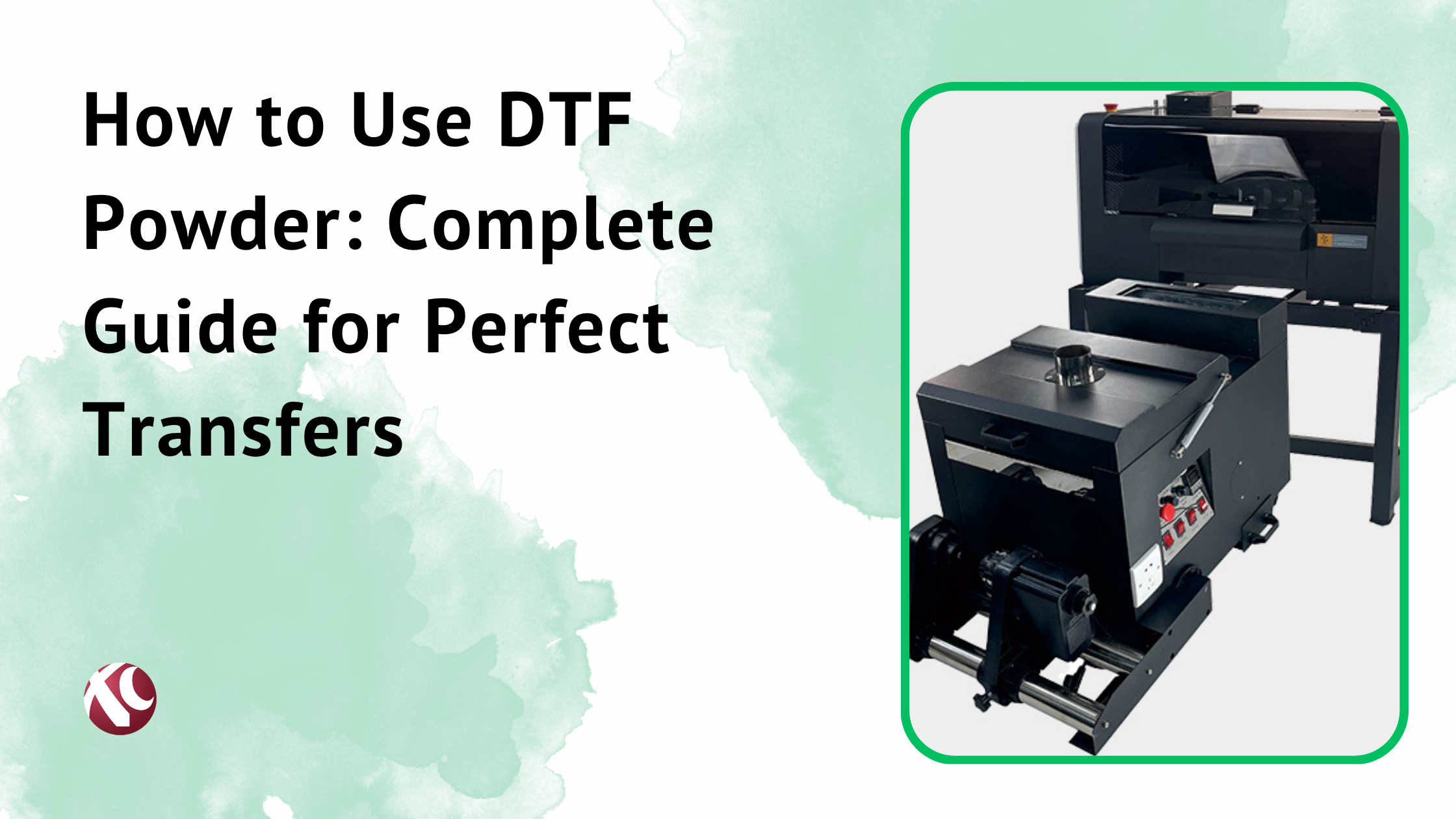
Step 2: While the ink is still wet, adhesive powder gets applied. The powder sticks to the wet ink. Excess gets shaken off.
Step 3: Heat cures the film. The powder melts slightly and bonds with the ink layer. Now you’ve got a transfer ready to go.
Step 4: Position the transfer on your fabric and heat press it. Temperature and time vary by material, but you’re typically looking at 300-330°F for 10-15 seconds.
Step 5: Peel the film off. Hot peel or cold peel depending on your film type and preference.
White ink is crucial here. It creates the foundation layer that lets colors pop on dark fabrics. Without white ink, your design on a black shirt would look washed out and muddy. The white provides opacity.
The ink bonds with that adhesive powder during curing. That bond is what makes DTF transfers durable. The powder becomes the adhesive layer between ink and fabric. No pre-treatment required on the fabric side. That’s a big deal. DTG needs pre-treatment on dark fabrics. DTF skips that step entirely.
DTF Ink Composition: What’s Inside?
DTF ink isn’t magic. It’s chemistry. Specific components engineered to work together for this exact application.
Three main elements make up DTF ink formulations:
Pigments and dyes provide the actual color. Vibrancy, accuracy, saturation. This is what you see.
Resin binders ensure the ink sticks to film and then to fabric. They also provide flexibility so prints don’t crack when fabric stretches.
Performance-enhancing additives handle everything else. Flow characteristics. Clog prevention. UV stability. Washfastness improvement.
Polymers in the formulation bond with the PET transfer film effectively. This adhesion has to be strong enough to hold during printing and curing but release cleanly when the film peels off.
Every manufacturer formulates slightly differently. Proprietary ratios. Different additive packages. But all legitimate DTF inks are engineered specifically for this application.
At xcinkjet.net, we run strict quality control throughout manufacturing. Advanced equipment. Consistent batch-to-batch performance. You can’t cut corners on ink formulation and expect reliable results.
Binders and Adhesive Properties
Binders are the unsung heroes of DTF ink. They don’t get attention like pigments, but prints fall apart without them.
Binders help ink adhere to both the PET film during printing and the fabric during final application. Dual-purpose adhesion. Different requirements for each surface.
Flexibility is critical. Fabric stretches. Fabric bends. Fabric gets washed and tumbled. If binders are too rigid, prints crack. Good binders create a flexible film that moves with the fabric.
The hot-melt adhesive powder works alongside ink binders. When heat activates the powder, it fuses with the binder layer in the ink. This creates the mechanical bond to fabric fibers.
Pigment-based inks and dye-based formulations use different binder approaches. Pigment binders need to encapsulate solid particles. Dye binders work with dissolved colorants. Chemistry varies accordingly.
Additives and Performance Enhancers
Additives make the difference between ink that works reliably and ink that causes constant headaches.
Flow improvers ensure ink moves through printheads smoothly. Consistent droplet formation. No hesitation or sputtering.
Anti-settling agents keep pigments suspended in solution. Especially important for white ink where heavy titanium dioxide particles want to sink to the bottom.
UV stabilizers protect prints from fading in sunlight. Outdoor exposure breaks down unprotected pigments. Stabilizers slow this degradation significantly.
Anti-clogging formulations prevent dried ink from blocking nozzles. Printheads are expensive. Protecting them with proper additives saves money long-term.
White ink stabilization is particularly challenging. Titanium dioxide is dense. It settles fast. Without proper anti-settling chemistry, white ink separates in the bottle and clogs printheads. Daily agitation is still required, but good additives make the ink more forgiving.
VOC content varies by formulation. Water-based DTF inks generally have lower VOC levels than solvent alternatives. Eco-friendly formulations prioritize operator safety and environmental responsibility.
Types of DTF Ink

DTF printing uses multiple ink types working together. Understanding each one helps you troubleshoot problems and optimize results.
Standard DTF configuration is CMYK plus white. Four colors for full spectrum reproduction plus white for the base layer. Some systems add additional colors for expanded gamut.
Beyond the basic setup, specialized ink types serve specific applications. Different chemistry for different needs.
xcinkjet.net produces DTF inks compatible with various printer models. Epson printheads. Ricoh printheads. Multiple viscosity specifications for different systems.
White DTF Ink
White ink might be the most important component in your entire DTF setup. Seriously.
It’s the base layer. The foundation. Without proper white coverage, colors on dark fabrics look washed out and dull. White provides the opacity that lets CMYK colors pop.
Properties that matter: high opacity for solid coverage, excellent spreading for an even base, consistent density for predictable color reproduction.
But white ink is also the most problematic. Titanium dioxide pigment is heavy. It settles constantly. Leave white ink sitting and the pigment sinks to the bottom while clear carrier floats on top. Print with separated ink and you get inconsistent coverage. Or clogged heads.
Daily maintenance is mandatory. Roll or shake white ink bottles every day. Some printers have built-in agitation systems. If yours doesn’t, manual agitation is on you.
White ink density affects everything downstream. Thin white layer means colors lack vibrancy. Too thick and you get texture issues or adhesion problems. Finding the right balance takes calibration.
Here’s what trips people up: white ink prints last in DTF. Reverse order from DTG and screen printing where white goes down first. In DTF, colors print first, then white prints on top as the backing layer. The film gets flipped during transfer, so white ends up between colors and fabric.
CMYK Color Inks
Cyan, Magenta, Yellow, and Key (Black). The standard four-color model that creates full-spectrum color reproduction.
Mix these four and you can theoretically produce any visible color. Reality is more complex, but CMYK gets you there for practical purposes.
Color accuracy depends on ink quality and printer calibration. Saturation determines how vivid colors appear. Gamut coverage shows the range of colors reproducible with a given ink set.
DTF color inks deliver vibrant output with exceptional blending capability. Smooth gradients. Clean transitions. Photographic reproduction when everything is dialed in.
Durability matters as much as appearance. Colors need to survive washing. Multiple washes. The binder-pigment combination has to withstand water, detergent, and mechanical action without fading or flaking.
Color fastness testing validates these claims. Quality inks resist fading even after 50+ wash cycles. Cheap inks show degradation much sooner.
Water-Based DTF Inks
Water serves as the carrier in these formulations. Pigments and additives suspended in water-soluble solution.
Advantages are significant. Lower odor during printing. Easier cleanup when things get messy. Environmentally friendlier than solvent alternatives. Safer for operators in enclosed spaces.
Trade-offs exist. Potentially less water resistance in the final product compared to solvent-based options. Longer drying times before powder application. Humidity sensitivity during printing.
Water-based DTF inks work excellently on cotton and cotton blends. Most commercial DTF applications use water-based formulations.
xcinkjet.net’s DTF inks are eco-friendly and carry Oeko-Tex® certification. This matters if you’re selling products where end consumers care about chemical safety.
Solvent-Based DTF Inks
Solvent inks use acetone, alcohol, or similar chemicals as the carrier instead of water.
Durability is the main selling point. Better water resistance. Stronger adhesion to challenging surfaces. Faster drying than water-based alternatives.
These inks work well for items getting frequent use and heavy washing. Industrial applications. Workwear. Anything demanding maximum durability.
The downside is ventilation requirements. Solvent inks release VOCs during printing. Enclosed spaces need proper airflow. Some jurisdictions regulate VOC emissions from printing operations.
Choosing between water-based and solvent-based depends on your specific application. Most garment decorators use water-based. Specialty industrial applications might justify solvent formulations.
Pigment-Based vs. Dye-Based DTF Inks
This is a fundamental divide in ink technology. Different chemistry, different behavior, different results.
Pigment-based inks use solid color particles suspended in carrier. The pigments sit on top of the material surface. Think of it like paint. Particles bonded to the surface.
Benefits: Highly lightfast. Pigment prints can last 50 years without significant fading. Crisp, durable results. Excellent washfastness. This is what most DTF operations use.
Dye-based inks dissolve colorants into solution. The dyes penetrate into materials more deeply rather than sitting on top.
Benefits: Softer hand feel on finished products. Brighter, more vibrant colors in some cases. Smoother gradients. Better for photographic reproduction.
Drawbacks: Less durable. Reduced lightfastness. Colors fade faster with washing and sun exposure. Not ideal for garments meant to last.
For DTF applications specifically, pigment-based inks dominate. The durability requirements of decorated apparel favor pigment chemistry. Dye-based has niche applications but isn’t standard.
UV DTF Inks
UV-curable inks use ultraviolet light to harden instantly. Different technology entirely from standard DTF.
These inks work on non-porous hard surfaces. Glass. Metal. Plastic. Acrylic. Ceramic. Wood. Leather. Surfaces where standard DTF transfers wouldn’t stick.
How it works: Ink is printed, then exposed to UV light. Photoinitiators in the ink trigger rapid polymerization. The ink hardens almost instantly instead of air-drying or heat-curing.
Benefits: Fast curing improves production efficiency. Vibrant colors with strong adhesion. Excellent durability on hard goods.
xcinkjet.net produces UV DTF inks compatible with Epson and Ricoh printheads. Different formulations for different printhead requirements.
Important distinction: UV DTF is for hard surfaces. Standard DTF is for textiles. Related technologies with different applications.
Specialty and Fluorescent Inks
Beyond standard CMYK and white, specialty inks offer additional creative options.
Fluorescent DTF inks provide extra brightness under normal light and really pop under UV/blacklight conditions. Neon colors. Eye-catching brightness that standard pigments can’t achieve.
Applications include sportswear, promotional items, safety apparel, event merchandise. Anywhere you want designs that demand attention.
Availability varies. Not every printer or ink manufacturer offers fluorescent options. Compatibility with existing systems requires verification.
Color fastness of fluorescent pigments is generally lower than standard pigments. The chemistry that creates fluorescence also makes those pigments more light-sensitive. Plan accordingly for intended use.
DTF Ink vs. Other Printing Inks
DTF isn’t the only game in town. Understanding how it compares to alternatives helps you pick the right method for specific jobs.
DTF Ink vs. DTG Ink
Two digital printing methods. Both produce full-color designs on garments. But they work differently.
DTF (Direct-to-Film):
- Prints onto film first, then transfers to fabric
- No pre-treatment required on any fabric
- Works on all fabric types and all colors
- White ink prints last (becomes base layer after transfer)
- Slight texture on finished prints
DTG (Direct-to-Garment):
- Prints directly onto the garment
- Requires pre-treatment, especially on dark fabrics
- Works best on cotton, struggles with synthetics
- White ink prints first as base layer
- Softer hand feel, especially on cotton
DTF wins on versatility. Print a transfer and apply it to cotton, polyester, blends, whatever. DTG is more limited but produces a softer feel when working with cotton.
Big advantage for DTF: no pre-treatment saves significant time. Pre-treating dark garments for DTG adds steps, chemicals, and drying time. DTF skips all of that.
DTF Ink vs. Sublimation Ink
These get compared constantly, but they’re fundamentally different technologies.
DTF Ink:
- Pigment-based formulation
- Creates a layer that sits on top of fabric
- Works on any fabric color including dark
- Includes white ink capability
- Slight texture you can feel
- Works on cotton, polyester, and blends
Sublimation Ink:
- Dye-based formulation that converts to gas
- Embeds into fabric fibers at molecular level
- Only works on polyester or poly-coated items
- Only works on white or light colors
- No texture whatsoever—colors are IN the fabric
- Exceptional durability and fade resistance
Sublimation produces unmatched results on polyester. No hand feel. Colors become part of the fabric. Incredibly durable for fade resistance.
But sublimation is limited. Dark fabrics don’t work. Cotton doesn’t work. DTF handles everything sublimation can’t.
Choose sublimation for all-over prints on white polyester sportswear. Choose DTF when you need versatility across fabric types and colors.
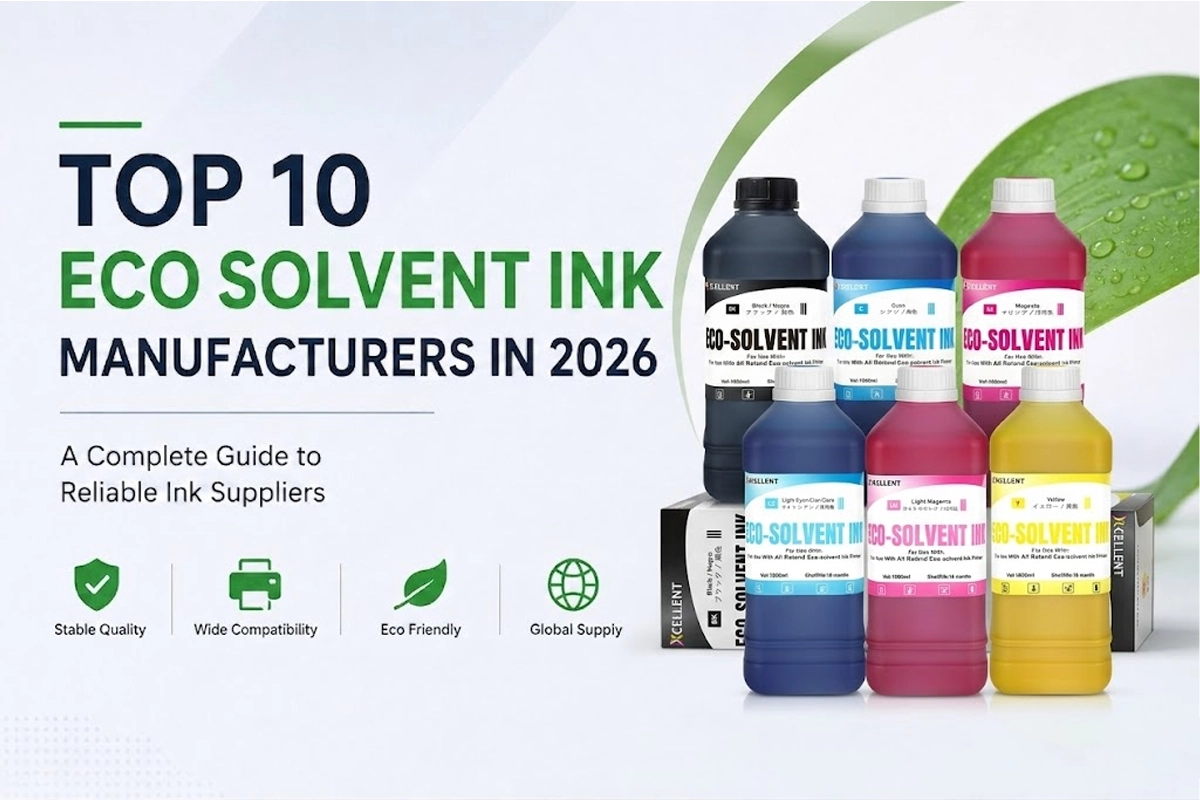
DTF Ink vs. Eco-Solvent Ink
These serve different markets entirely. Not really direct competitors.
DTF Ink:
- Designed for textile and fabric applications
- Primarily water-based formulations
- Creates transfers for apparel decoration
Eco-Solvent Ink:
- Designed for signage, vinyl, banners
- Solvent-based for outdoor durability
- Prints directly on substrate material
- Excellent weather resistance
Eco-solvent shines for outdoor signage that needs to survive years of sun and rain. Vehicle wraps. Building signs. Banners.
DTF handles fabric decoration. Different applications, different requirements. You wouldn’t use DTF for a building sign and you wouldn’t use eco-solvent for a t-shirt.
Can I use regular ink for DTF printing?

No. Absolutely not. Don’t try it.
Regular inks are designed for paper. They can’t handle the temperatures involved in DTF curing and pressing. They lack proper adhesion chemistry for PET film. They won’t bond with adhesive powder. And they’ll likely damage your DTF printer’s mechanisms.
DTF printing requires DTF-specific ink formulations. The chemistry is engineered for this exact application. Trying to substitute regular inkjet ink will produce terrible results and potentially destroy expensive equipment.
Use proper DTF inks. Always. No shortcuts here.
How much does DTF ink cost?
Pricing varies by quantity, supplier, and specific formulation.
Water-based DTF inks are generally competitive with other digital printing consumables. Not the cheapest option but reasonable for the capabilities.
Consider coverage efficiency, not just price per bottle. High-quality ink with better pigment concentration might cost more per milliliter but produce more prints per bottle. Yield matters.
xcinkjet.net offers factory-direct pricing with bulk supply options. We manufacture our own inks, which eliminates middleman markups. Competitive pricing for small businesses and large operations alike.
For specific pricing on your volume needs, requesting quotes makes sense. Costs scale with quantity, and different formulations serve different applications.
Is DTF ink safe and eco-friendly?
Many DTF inks are water-based and environmentally friendly. Significantly safer than older printing technologies.
Safety profile:
- Low VOC emissions
- Minimal odor during printing
- Safer for operators than solvent-based alternatives
- Some formulations are biodegradable
Certifications matter. Look for ECO certification and Oeko-Tex® approval. These verify that inks meet environmental and safety standards.
xcinkjet.net formulations are environmentally friendly with relevant certifications. We prioritize operator safety and environmental responsibility in our chemistry.
That said, proper ventilation is still recommended for any printing operation. Good airflow protects operators regardless of ink type.
Do I need special maintenance for DTF ink?
Yes. Regular maintenance keeps your system running properly and prevents expensive problems.
Daily requirements:
- Printhead cleaning, especially for white ink channels
- Roll or shake white ink bottles to prevent settling
- Run nozzle checks to verify proper function
Regular maintenance:
- Use manufacturer-recommended cleaning fluids
- Flush systems if printers sit idle for extended periods
- Check and clean capping stations
White ink causes most maintenance issues. Titanium dioxide settling is relentless. Skip daily agitation and you’ll eventually clog heads. Prevention is cheaper than printhead replacement.
xcinkjet.net produces maintenance fluids specifically formulated for DTF systems. We also provide technical support for troubleshooting maintenance issues.
Follow manufacturer guidelines for your specific printer model. Different systems have different requirements.
What’s the difference between hot peel and cold peel DTF films with inks?
The film type affects peeling timing. Not the ink itself. Same DTF inks work with both film types.
Hot peel films: Remove the film immediately after pressing while still hot. Results in a softer hand feel. Most popular choice in 2025 for garment decoration.
Cold peel films: Wait 5-10 seconds after pressing for cooling before peeling. Better for glossy finishes. Preferred for some hard goods applications.
The ink formulation doesn’t change between film types. Your DTF ink works with either. Choose film type based on your desired finish and application method.
Can DTF ink work on dark fabrics?
Yes. This is one of DTF’s biggest advantages over competing technologies.
White ink provides the base layer that gives colors opacity on dark backgrounds. Print vibrant reds, blues, yellows—any color—on black fabric. The white layer underneath makes it possible.
No color limitations regardless of fabric color. Black shirts. Navy shirts. Dark green. Maroon. Whatever. DTF handles it.
Compare this to sublimation, which only works on white or very light fabrics. Or standard DTG without pre-treatment, which produces washed-out results on dark garments.
For dark fabric printing specifically, DTF is hard to beat for versatility and simplicity.